Ghost of Yōtei Spoilercast interview: the game’s ending, open world design, Takezo The Unrivaled and much more

Ghost of Yōtei Spoilercast interview: the game’s ending, open world design, Takezo The Unrivaled and much more

Ghost of Yōtei Spoilercast interview: the game’s ending, open world design, Takezo The Unrivaled and much more https://ift.tt/rs3LRM4

Where to start? It’s a familiar mantra to those of us who have ridden into the lavish landscapes of Ghost of Yōtei’s Ezo. With a rediscovered home behind, and a world filled with revenge, myths and secrets ahead, it’s proven a wonderful dilemma to have. And every corner explored, each tale told, and duel won leading to further questions, one of which kept recurring throughout: how did this all come together? To answer, we reached out to ask two people who can speak to Ezo’s secrets best: the game’s creative directors Jason Connell and Nate Fox. 

Sitting down with them, and a whole game to unpack, came the now-familiar refrain: where to start? The answer to that: begin at the end. 

A word of warning then: this interview strays deep into spoiler territory. First, mark every member of the Yotei Six off your list, and discover every hidden corner of Ezo. The following chat charts game design choices, key side missions, the game’s conclusion and more. 

Spoilers below

Note: This version of the interview is condensed for clarity and brevity. The full conversation will be available on PlayStation Podcast later today. 

PlayStation Blog: The game’s final duel is a battle with Lord Saito. It really feels like it’s all been leading up to this moment, not just for Atsu, but also the player and that Saito throws practically every challenge you’ve learned to face at you in one single duel. Can you tell us a bit about how you approach the mechanics of this fight?

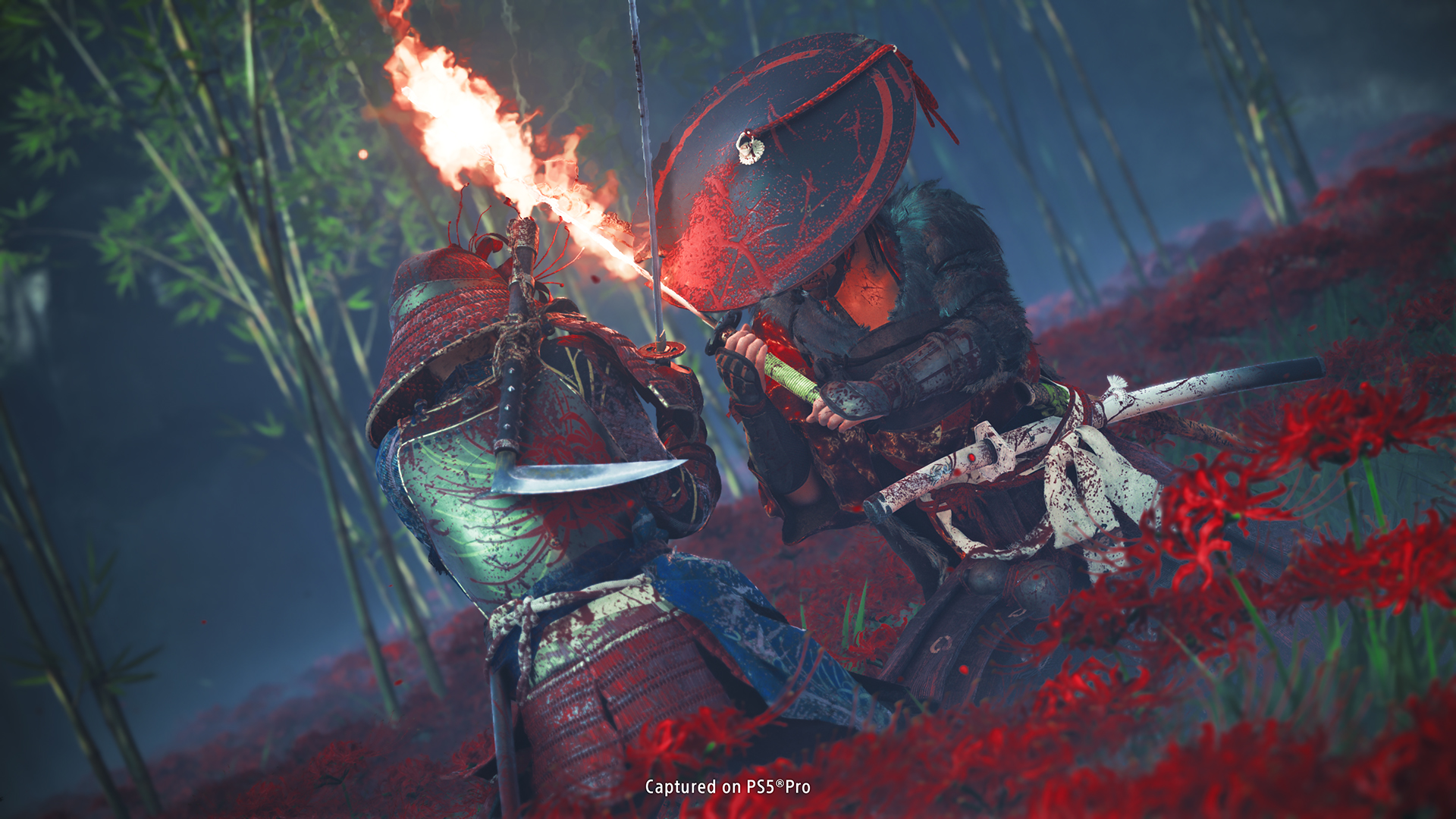
Jason Connell: We wanted the ending to be an emotional moment, one that brought together all of her journey of overcoming trauma. And it’s both about kind of figuring out that there’s something better to live for, but also to kind of celebrate the ways that the player has, through their efforts, kind of improved Atsu, made her more capable. And in Ghost of Yotei, that’s about mastering weapons, becoming more confident, more capable. And so, Saito himself will attack you with every weapon that you will need to counter with weapons that you’ve learned throughout your journey. This is a chance to celebrate your mastery and understand how to counter and deal with that. Ultimately, in the final battle, where it’s Katana versus Katana, it’s bringing it back down to that simple sword that your father forged in celebration of his two children, and that’s the weapon that you finished the battle with. 

The Storm Blade story. It’s a fascinating one in so much that it reveals the fate of Jin Sakai. Can you tell us about how you approach the creation of this mission? Is there any concern about talking about the protagonist of the previous title in Ghost of Yotei, or confirming a relatively sad end to such a beloved character?

Nate Fox: I would say about a year or two into production, we had some ideas of where that might be and how we might be able to honor that character. We always knew it was going to happen. But then when we started placing it in the world, we just found this wonderful spot that really felt like it could be his spot, you know, and we could celebrate all aspects, whether it’s the tree or the Pampas grass or the or the Suzuki grass or the blade. Things you identify with his story and his legacy, and make it like a shrine / mission for him. 

We wanted it to be in the right spot in the game. Like if you come out right out the gate, and it’s right there on your right, that doesn’t seem right. That doesn’t seem like it’s fitting. But putting it in the appropriate time space where you’ve sat with this game well enough, and you understand what this game is, and when you find it, it’s a gem, especially if you were a fan of the previous game. And getting the timing right was it was a big part of that too.

Was the intent always to make Takezo The Unrivaled the hardest encounter in the game. Or would you designate that as the hardest encounter in the game? I’m curious to know if the studio defeated him on Lethal difficulty,  and how quickly you defeated him on that setting. 

Jason Connell: Takezo was not in anyone’s plans at the beginning of the game. It was a great idea, put forward by one of the folks who makes missions, that we would keep to Takezo as a sort of ultimate battle after you’d finished the Atsu’s journey. And I couldn’t be happier that it represents this, you know, the hardest challenge in the entire game. In the most epic location. Our combat team set it to what many of us thought was impossible, until I saw one of the gameplay coders effortlessly beat it without all the upgrades. He said that he got it on his fourth try. Now, these people have been playing the game, programming the combat, for years! So that’s what you’re up against, if you’re having a hard time and you think this is impossible. The way to get better is just to simply make the game for many years and work in the combat team, and then suddenly it will all be easier.

So past the intro encounter with The Snake, the game’s designed to let you choose which of the Yōtei Six to hunt and in what order. This can shape your play style, such as The Kitsune path expanding your stealth options, or bring a deeper connection with the world, like the Oni’s, leading you to encounter Jubei. How do you design the game to accommodate those different play styles that result?

Jason Connell: Well, when we set out to make this game, when it was just Nate and I, you know, dreaming up what it would be, something we talked about was just really leaning into what we saw fans really love about playing in the open world, having the freedom to kind of sort of do what they want to do. 

So from the very beginning, we were like, okay, let’s go real hard at this. Let’s invest in design and tech that allows us to give a little bit more freedom, even from the beginning. And so that has wrinkles, you know, it can get challenging to tell a really solid story that needs a beginning, middle and end. So some of our first stabs at this were way too open, right? Like, you can just go after any of the Six. And in that process, Nate pointed out, like, how hard that might be to have that beginning, middle and end, and we need that, because that’s Atsu’s story: that’s the structure.

Really early on, you definitely get this kind of choice. It’s not just a narrative choice. We added weight to that, by giving it a mechanical sort of choice. If you like role playing, if you like being a stealth- like character, or you like playing games that have ninja-like abilities, then you know, this area up here might be more for you. Or maybe you’re intrigued by this over here, which has got more of a traditional big castle and some cool fire weapons and a spear, and we kind of hint you with a little bit of it. So if it’s not just the story that motivates you, or that you’re intrigued by that narrative seed that we’re giving you, maybe it’ll be sort of the mechanics, and we’re giving you a number of ways you might be able to be influenced to make an informed decision. 

Briefly talking about weapons, the Sensei quests clearly indicate which weapons they’ll unlock from the start, but the conditions to unlock the rifle and gun in comparison isn’t as obvious. Why was that?

Jason Connell:  Well, we knew that the hand to hand weapons were a great source of pleasure for players. They loved getting them. They loved mastering them, and it adds a lot of diversity to your experience of fighting enemies. And that combat, the lethal precision inside of the game, is something that is sort of dead center of the experience. 

So we wanted to make sure players knew that they were out there and make it pretty easy to find them, because they’re such a driver of joy in the game. Range weapons are not as core. So the firearms, we didn’t want to make them totally apparent where to go, so that you would have some of the pleasure of discovering them for yourself, whereas the melee weapons we knew were just too important to let anyone miss out on. They are optional, so you could miss out on them, but we didn’t want just sort of missing their presence to be the issue. We wanted to be a choice on the player’s part to say, I don’t want to bother with that.

There are some wonderful smaller encounters in the game, such as the guy who disappears – poorly, I will say – in a haze of smoke bombs… or the fight with a ronin that, I think he’s labeled as “Irritating Ronin”, that elicits an angry response from Atsu once she’s defeated him. Can you touch upon how these came about? 

Nate Fox: Just really early on we had people that would work on the main story, then we have people fleshing out the world. Some of those smaller bits just come from, “hey, how would people operate in this place?” How can we give this place a little bit of personality that you might be intrigued and interested to hear about these people. They’re just flavors in the world. Which, you know, honestly, we didn’t have a ton of time to do in the last game. So it was nice to be able to sort of try some of those unique flavors early on. That smoke bomb guy might have been one of the very first ones that we created in the game. We went through a bunch of iteration to make him who he is, but that might have been the first six months of the project. And I’m happy to see some of those make it through to the end, because there’s plenty that do not [laughs]. 

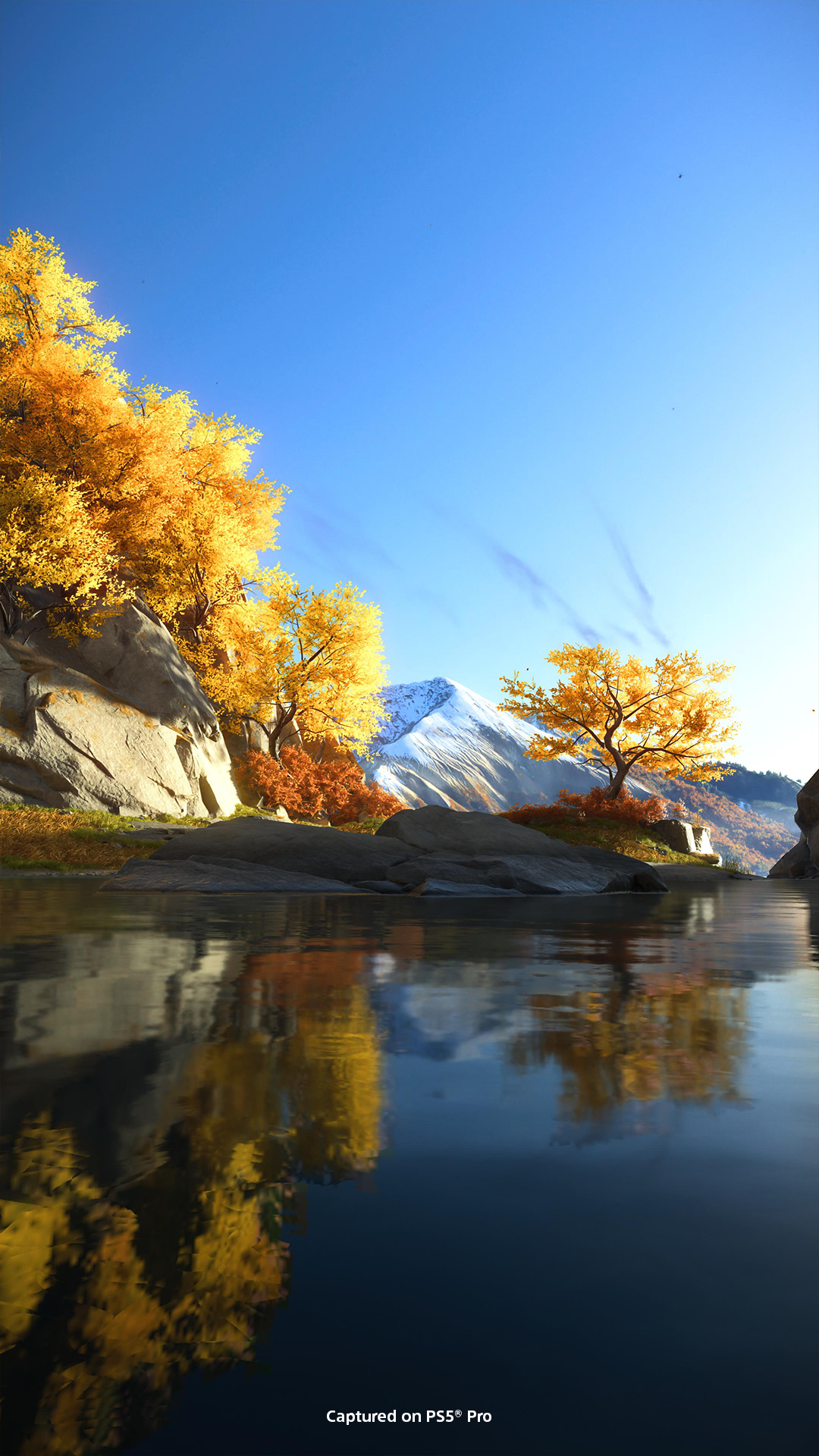
It is a beautiful world. There are numerous moments in which, say, a cliff climb or turning the road leads to a picturesque scene that is worth photographing. How intensive was it to get those moments to hit the sweet spot? Did it mean the immediate environment, how to be continually reshaped, to have the camera angles hit just right?

Nate Fox: One of the challenges of making an open world that’s as big as this and also trying to make a game that is artistically powerful and potent, that people step in the world and they feel the weight of the art… That is super hard to do. 

The fact that we cannot control what you’re looking at makes it tremendously harder, right? Like, we have no idea where you’re looking. We have no idea what you’re doing. We have a clock that kind of moves when you’re in the open world. So we don’t know if you’re in day or night. Certainly, in some cases, we’ve specifically put you in areas where special times of day exist, like the Spider Lily mission

But it is such a testament to the environment art team to be able to construct an environment with such beauty that no matter if I look that way, or that way, whether it’s daytime or it’s night time, shockingly, looks pretty good. That is very hard to do. Open World visual design: incredibly hard. Now they definitely know that you’re going to be coming up over this ledge during a Shrine climb. You’re going to be coming up over this ledge, and they might position those rocks to be, and that shrine, to look to the point where you know you’re going to be looking generally in this direction. They’ll definitely do that. And they do a wonderful job constructing what they think that you’ll do. But because we don’t know, we have to get a couple things right. We have to get the atmosphere right. We have to get lighting right. We have to get color. The pacing of the visual noise, and how much noise you have on the screen. All these things are just constructed in the open world DNA of the visual design. And we hope that we can guide you to areas where it just kind of puts a magnifying glass on that and makes it, you know, really pop in those moments. A very few amount of people on the team really get to contribute exactly to this, and I think they do a wonderful job bringing it to life.

If you want more Ghost of Yōtei, New Game Plus is available as a game update, while cooperative multiplayer DLC Ghost of Yōtei Legends launches in 2026.

Zenless Zone Zero Version 2.5 introduces dual-form Void Hunter on December 30

Zenless Zone Zero Version 2.5 introduces dual-form Void Hunter on December 30

Zenless Zone Zero Version 2.5 introduces dual-form Void Hunter on December 30 https://ift.tt/VuxBfyM

Hello, Proxies! Greetings from the Zenless Zone Zero dev team. I’m Zhenyu Li, the producer of Zenless Zone Zero. As our exploration of Waifei Peninsula deepens, the culminating chapter of Season 2 finally sheds light on long-buried secrets. I am excited to share that Zenless Zone Zero Version 2.5 “To Be Fuel for the Night” will arrive on December 30, bringing abundant content, optimizations, and rewards.

Unraveling the secrets hidden within the Hollow’s expansion

During past battles, the legendary Qingming Sword resonated strangely deep within the Lemnian Hollow, implying its primordial power has a profound connection to the Hollow. After borrowing this strength to overcome formidable foes, Ye Shunguang now faces the inevitable cost of wielding such extraordinary power. Meanwhile, mysterious white flowers — previously seen only within the Hollows — have begun blooming in Failume Heights, casting a foreboding shadow over the district.

Amid the rising tension, Zhao of the Krampus Compliance Authority arrives with alarming news: the Lemnian Hollow has expanded. Proxies will join Ye Shunguang and Zhao to venture into the ruins of the Lumite Mine to investigate anomalies, delve deeper into the conspiracy of the Exaltists, and face the ultimate battle in Waifei Peninsula.

Rise of Void Hunter Ye Shunguang

After forging countless cherished memories with Ye Shunguang and fighting alongside her to awaken Ye Shiyuan, Proxies will once again join forces with this young senior disciple of Yunkui Summit. As the game’s first dual-form Void Hunter, Ye Shunguang, an S-Rank Honed Edge Attack Agent, can unleash fluid strikes and explosive burst phases with the Qingming Sword, delivering intimidating attacks that can make a significant impact in intense battles.

A familiar Agent accompanying us on this adventure is Zhao. Despite her adorable appearance, Zhao holds the legacy of the unbeaten legend of Krampus Compliance Authority. As an S-Rank Ice Defense Agent, Zhao will bring immense power to the battlefield and provide crucial support to Ye Shunguang.

Enhanced experience with a multitude of events and optimizations

With rich events and ongoing optimizations, Version 2.5 brings enhanced game experiences and a more vibrant Proxy Outpost community feature. The long-awaited multiplayer combat is coming in the form of the limited-time event Joint Investigation: The Divine Maze. Players can form three-member squads to tackle cooperative challenges, putting their teamwork and coordination to the test in dynamic combat encounters.

In addition to upgrades to Shiyu Defense and Deadly Assault, a new addition, the Proxy Outpost, will help to foster community interaction. Through the in-game forum, Proxies can create or join interest-based outposts to share passions, post commissions, and accept tasks. At the same time, a new quick-sweep function will be introduced to Combat Simulation, allowing players to use Ether Batteries to quickly obtain agent promotion materials and Drive Discs. Altogether, these free up time for relaxation and leisure in New Eridu.

The enhanced experience also extends to our valuable companions in the Hollows. To allow our previous Agent friends to better adapt to the harsher battlefield, we will gradually enhance all agents in the permanent Stable Channel in the near future. In Version 2.5, agents including Soldier 0 – Anby, Ellen, Soldier 11, Grace, and Burnice will be the first to receive refinements to their combat mechanics and performance boosts, marking the second wave of enhancements for Soldier 0 – Anby and Ellen.

Ring in the new year with exclusive rewards

To embrace the upcoming new year, Zenless Zone Zero is gearing up to welcome both new and returning Proxies. All players can dive directly into the intriguing story of Version 2.5 through the Advance Screening function, claim a free S-Rank Agent Zhao and agent promotion materials, and obtain Jane Doe’s new outfit through the Today’s Outfit section of the Store. In addition, to celebrate Zenless Zone Zero winning the Grand Award at the PlayStation Partner Awards 2025, an additional 1,000 Polychromes will be distributed as a token of appreciation for all Proxies’ support.

The expansion of the Lemnian Hollow and the emergence of the mysterious white flowers signal a pivotal moment in the story of New Eridu. With powerful new allies, adrenaline-fueled co-op combat, and community-driven features, Version 2.5 invites you to embark on this thrilling adventure with us. Thank you for your unwavering support. We look forward to sharing this new chapter with you on December 30, and wish you all the best in 2026!

Helldivers 2: Festival of Reckoning launches Dec 18

Helldivers 2: Festival of Reckoning launches Dec 18

Helldivers 2: Festival of Reckoning launches Dec 18 https://ift.tt/jQLdOmG

It’s once again time to come a’Reckonin’ o’er the hill and vale, Helldivers–the Festival of Reckoning’s upon us*! This is a time to reinvigorate our hearts with a commitment to spreading peace and Managed Democracy throughout the galaxy, and we’ve got a special celebration lined up to help.

Helldivers 2: Festival of Reckoning launches Dec 18

The Festival of Reckoning is a celebration of love, family, peace and the pursuit of peace using any means necessary. The Reckoning Fund, which finances the yearly event, is bursting with credits, and so this year’s festival is even longer and more joyously explosive: The 2025 Festival of Reckoning begins in Helldivers 2 on December 18 2am PT / 10am GMT / 11am CET / 7pm JST and runs until December 31 14.59pm PT / 10.59pm GMT / 11.59pm CET / 7.59am PT (Jan 1)

We’re getting you into the spirit with holiday Major Orders that grant you limited-time access to a host of stratagems to celebrate the event in grand fashion. No stratagem is off-limits, either–meaning we will even be letting you try out some stratagems from our Premium Warbonds.

During the festival, you will see in-game dispatches will go out to let you know which celebratory Major Order is active, and which mandatory celebration stratagems are available for temporary festive use.

Let’s light up the skies with the fires of our peaceful and democratic seasonal happiness, Helldivers!

*Gameplay requires internet access and paid for PlayStation Plus membership (sold separately) on PS5. PlayStation Plus membership subject to recurring subscription fee taken automatically until cancellation. Age Restrictions apply. Full terms: play.st/psplus-usageterms.

World War Z x The Walking Dead lurches onto PS5 & PS4 In January

World War Z x The Walking Dead lurches onto PS5 & PS4 In January

World War Z x The Walking Dead lurches onto PS5 & PS4 In January https://ift.tt/FwEDWNp

Fast versus slow. This varying approach to depicting zombies in film, television, and video games has been going on for decades. The Zekes in World War Z are known for their speed and relentless aggression, stacking on top of each other in a frenzied bloodlust to seek out their next meal. But as we pondered this concept, we found ourselves asking, “Why not both?” The idea of transforming gameplay with Walkers became the crux of our partnership with AMC to bring a crossover episode of The Walking Dead into World War Z.

World War Z x The Walking Dead lurches onto PS5 & PS4 In January

Maps will still be similarly-sized as to what you’ve experienced in World War Z so far, but we’ve made the routes that you traverse more narrow and claustrophobic. You’ll be forced to take down tougher and deadlier herds as they slowly shuffle towards you, with a constant threat of being overwhelmed. Our special Zekes (Bulls, Bombers, etc.) will remain a part of the mixture of enemies, but we’ve also added in a new special – the Spiked Walker. He’s got an armored head and can cause players to bleed if they get too close to him. As you may have guessed, melee is a bad idea — at least initially. You should take down the Spiked Walker from range, forcing it to go prone, then finish it off with a coup de grace for the most efficient kill. If you don’t kill it while it’s down, it will get right back up and keep coming for you.

But the Walkers are not the only content in this crossover DLC…

This new campaign episode brings to life three separate but thrilling chapters starring legendary characters from AMC’s The Walking Dead – Rick Grimes, Daryl Dixon, Negan, and Michonne. Andrew Lincoln, Norman Reedus, and Jeffrey Dean Morgan have reprised their roles, providing the voiceover to bring these fan-favorite characters to life.

The Walking Dead’s heroes won’t be coming empty-handed, either. Rick brings along a new weapon skin for his trusty Revolver, while Daryl sports a new skin for his lethal Crossbow. Michonne and Negan will each wield completely new melee weapons – Michonne with her iconic Katana and Negan with his one and only Baseball Bat, “Lucille”.

As for the stories themselves, Chapter 1 begins at The Prison, where Rick, Daryl, Michonne, and Negan battle their way through the correctional facility that the band of survivors previously used as a base, then abandoned when it was overrun. What begins as a rescue mission quickly becomes a life and death struggle to survive against an army of the dead.

In Chapter 2, the four return home to Alexandria, only to discover that the town is on fire and overrun with Walkers. A series of problems make it more and more difficult to ensure the safety of the survivors within. It may take some ingenuity to salvage that which remains…

Finally, in Chapter 3, the crew travels to Grady Memorial Hospital to retrieve life-saving medication for their community. Atlanta, however, is more walker-infested than the last time they were there, so they have to be extremely cautious as they make their way through the hospital. If they succeed, it could mean saving many lives.

We hope that this crossover of post-apocalyptic universes proves once and for all that both slow and fast zombies can indeed coexist, albeit delightfully un-peacefully. World War Z x The Walking Dead DLC launches on PS5 and PS4 in January 2026.

The Relic: First Guardian, a new dark action-RPG, comes to PS5 on May 26

The Relic: First Guardian, a new dark action-RPG, comes to PS5 on May 26

The Relic: First Guardian, a new dark action-RPG, comes to PS5 on May 26 https://ift.tt/HiBMorP

Inhyuk Park here from Project Cloud Games and it gives me great pleasure to share more details on our team’s unique approach to The Relic: First Guardian.

But first of all, I have some very exciting news. Alongside publisher Perp Games, we are excited to announce that The Relic First Guardian will launch on the PS5 on May 26, 2026. 

The Relic: First Guardian, a new dark action-RPG, comes to PS5 on May 26

The Relic: First Guardian is a journey that follows forgotten voices in a mysterious world. Every trace you encounter is the final record of someone who once lived here. In this world, you are not a legendary hero; you are the one who restores memory and a keeper of stories.

A world that flows like a folktale

From the beginning, we wanted this game to feel like an old folktale told by a grandfather to a child; gentle, lingering, and quietly profound.

Stories that settle deep inside you. Tiny objects that hold enormous tragedies. Even outside of combat, you will see the gouges left on a broken wall, a half-burned letter on the floor, a small pinwheel turning quietly atop a hill and imagine the lives that once existed here.

At the heart of this world lie the stories of those who vanished.

Combat – freedom in attack, intensity in survival

We redefined our combat system to match this emotional direction.

  • Stamina is never consumed when attacking.
    • In The Relic, attack is freedom. To preserve the player’s creativity, rhythm, and style, stamina has been removed from all offensive actions.
  • Stamina exists only for survival.
    • Defense, dodging, and the brief moments where life and death split apart are the only times stamina decreases.
  • Skills consume no resources and operate entirely on cooldowns.
    • This ensures a seamless combat flow where players can freely express the style they want.

Five weapon styles – battles shaped by emotion

At the start of the game, players choose from five distinct weapon types. Each weapon is designed around a different emotional theme and creates a completely unique combat rhythm.

Beyond that, each weapon style includes twelve exclusive skill trees, allowing players to mix and match abilities to form a class that exists nowhere else but within their own playstyle.

Equipment that exists only once in this world

The Relic departs from the traditional RPG loot structure.  Here, there are no “similar swords” or “slightly better armor variations.”

Every weapon and piece of armor in this world exists only once.

  • A sword may be the final blade of a knight who defended hundreds.
  • A shield may be the vow a family protected for generations.
  • A greatsword may carry the last hope of someone who never returned home.

You do not simply acquire equipment, you inherit the story it has lived through.

Grow without levels and become stronger through memory

There are no character levels in this world. Instead, players grow through memory.

At the center of this system are Relics (Runes) fragments imbued with the emotions and wishes of those who lived before.

Each Relic carries over 70 unique passive effects. They reshape skill behavior, alter combat tempo and dramatically enhance specific weapon styles.

By equipping these Relics, players build the kind of Guardian they wish to become.  Growth is not measured by numbers, but by the accumulation of the experiences you gain in this world.

Bosses – The final echoes of lost voices

More than 70 bosses appear in The Relic.

They are not simple obstacles; each is a standalone folktale.

  • A father who became a monster after starving.
  • A cursed rage left behind by a broken promise.
  • A soul consumed by the Void, having forgotten even its own name.

Their stories reach completion only when players confront them.

The First Guardian – An ancient promise carried by the wind

In The Relic, the player is not a hero remembered for great deeds, but someone who gently restores fading memories to life.

A child turning a pinwheel while waiting for a father who never returned, a brief letter left for someone who could no longer read it, and countless footsteps lost to the scars of war. All of these stories quietly reappear as the player moves through the world.

And the one who gathers these fragments of memory, weaving them back together, is the First Guardian.

You walk a journey that exists only once in this world. You gather memories, piece stories back together, and return forgotten voices into the wind.

And someday, someone may retell your story like a folktale whispered beneath the night sky. See you May 26.
The secrets behind Ghost of Yōtei’s The Spider Lily General myth

The secrets behind Ghost of Yōtei’s The Spider Lily General myth

The secrets behind Ghost of Yōtei’s The Spider Lily General myth https://ift.tt/jHSG9lr

“I wouldn’t go in there,” warns traveling storyteller Ugetsu, as Atsu approaches two large and looming wooden doors. “Because you may not return.”
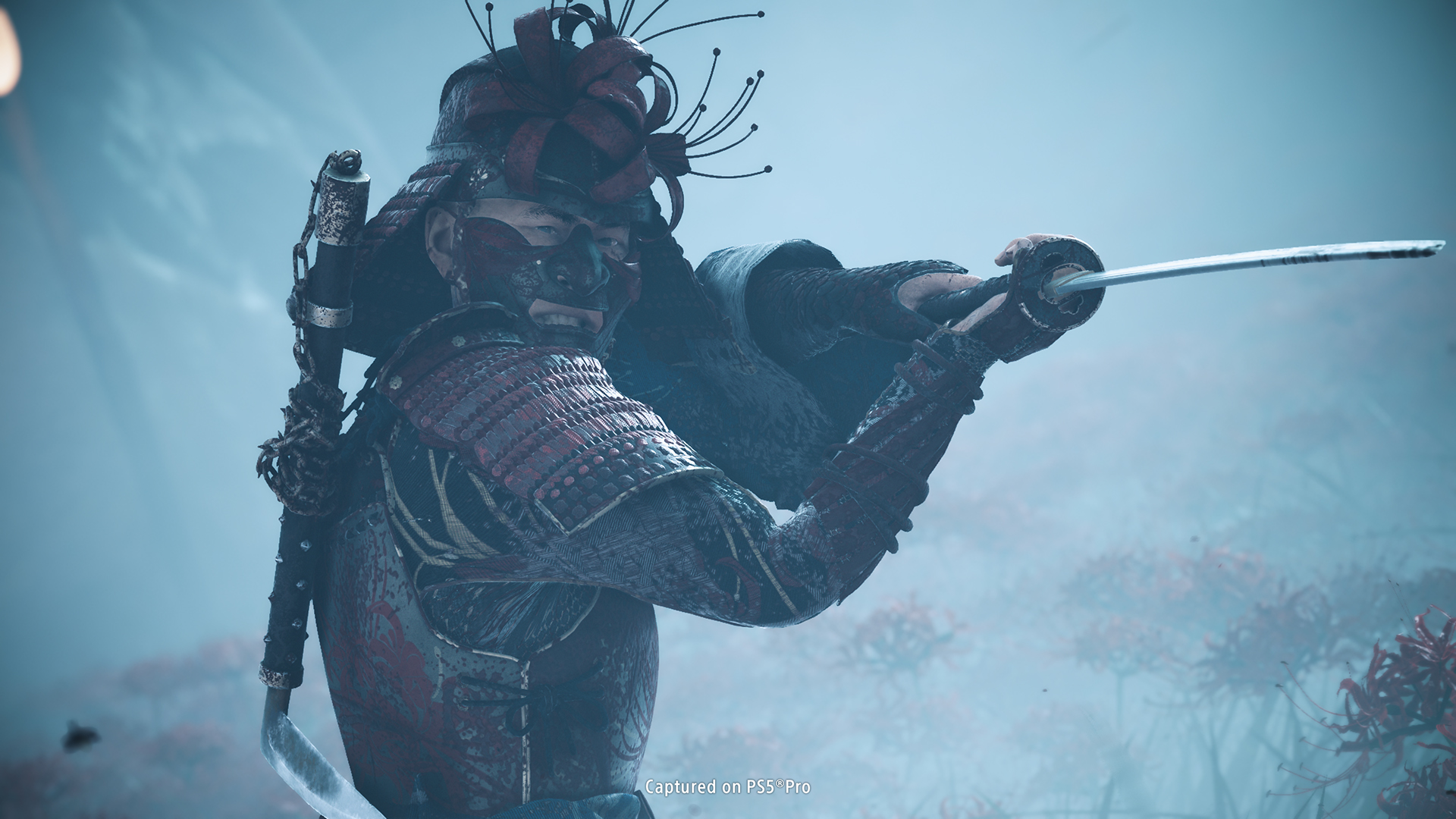
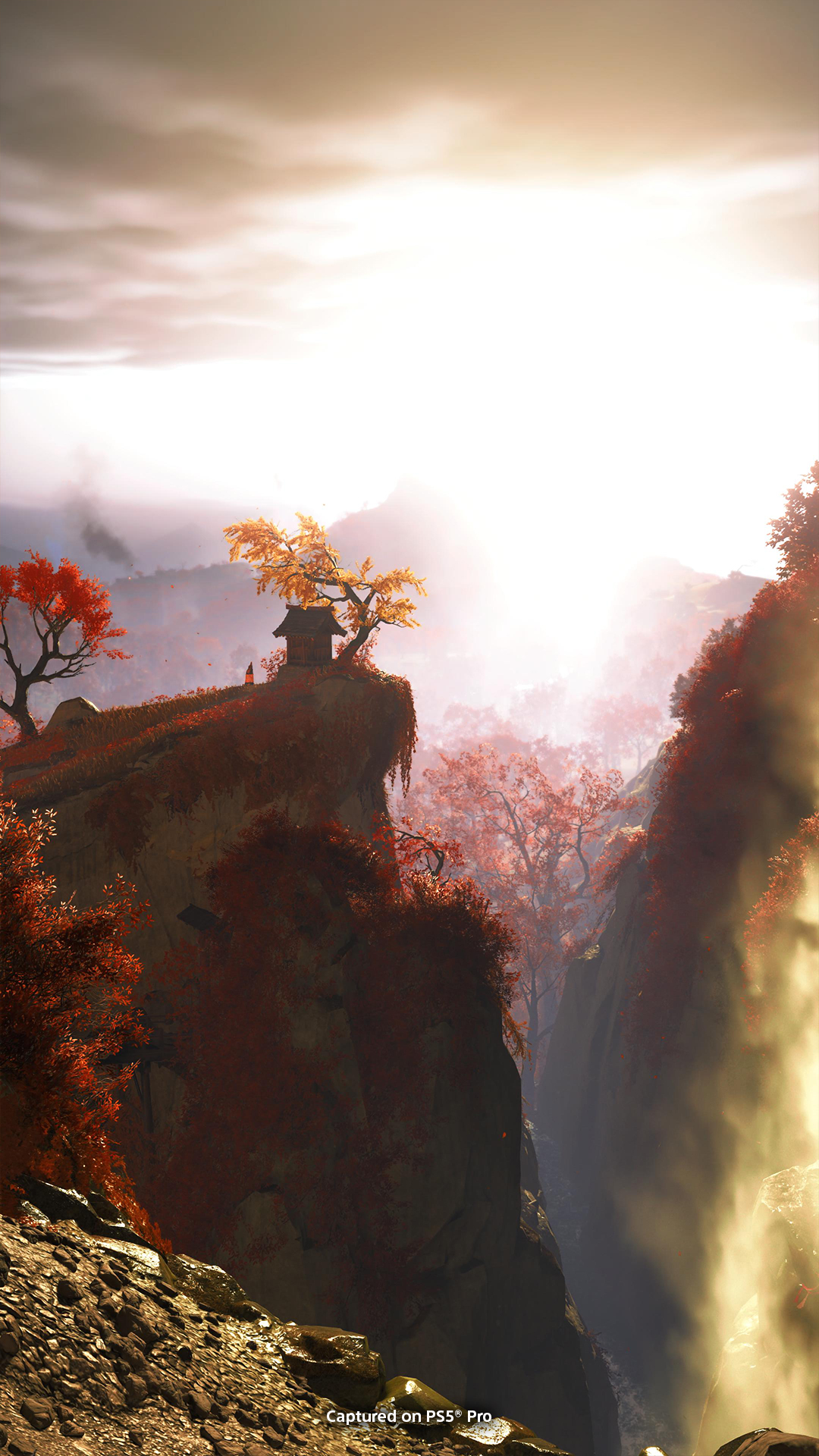
It’s a caution many Ghost of Yōtei players loved to ignore. As the trigger point for revered side-quest The Spider Lily General, that ominous gate is the start of a haunting mythological adventure that lingers long in memory after its completion. Only fitting for a game that launched so close to Halloween.

I spoke to Creative Directors, Nate Fox and Jason Connell, to find out the inspiration and secrets behind The Spider Lily General, and how they felt about the optional quest’s popularity. But, similar to Ugetsu, I must warn you – there are spoilers ahead. You might want to play this mission before venturing any further…

The quest’s origins

“The Spider Lily General was actually one of the earliest missions in the game and one of the first Mythic Tales we created,” reveals Jason. “It came from one of our designers and writers, and we dissected what makes a great Mythic mission, how they’d look and feel.”

While these particular side-quests can be inspired by historical figures, The Spider Lily General was crafted as an original tale to represent the trauma of war. The titular warrior’s battle prowess and armour turned him into a legend, but after retiring, the General accidently injures his daughter during a sparring session. Seeing his child die from a wound he inflicted poisons the General with unrelenting grief, leading to him haunting the forest. And now looters hunt for his armour, often dying by the ghost’s sword.

“We knew we wanted the story to maybe have some tragedy associated with it,” says Jason. “And at some point the writer suggested it could be a point of reflection for Atsu, who helps him heal. She’s fighting him, but understands his trauma.”

But why spider lilies? Was there some specific symbolism in their use, given the myth says they sprouted wherever the General spilled his victims’ blood?

“They’re actually toxic, and in real life they’re planted in graveyards to keep away animals,” explains Nate. “So they represent death, as well as connecting to emotional relationships. They also had a functional in-game purpose – early playable feedback suggested it was a bit hard to understand where to go and what to do in the mission because the area is so large. So the lilies made it clearer how to move through the mist.”

Developing horror

The practical use of the lilies were just one of many mechanical aspects Sucker Punch had to consider for a quest which took on such an eerie feel in contrast to much of the main game.

“We don’t have a lot of experience with that sort of horror tone,” says Nate. “So there were specific ways to make it feel like the world is not as you know it. The little maze, a music stinger, and hearing people wailing in the distance. Or reaching a bunch of enemies before a mist rolls in and you then find them all slaughtered.

“There’s also the use of negative space, like when you start the quest and go up a staircase with the mist coming down and the spider lilies going up, with old corpses present… but nothing is attacking you. That long walk is simply there to immerse you in the tone.”

“We were inspired by elements from past survival horror games,” explains Jason. “The prototypes explored weird camera angles. It was really challenging, but even if we didn’t use them it set the vibe for what we were trying to achieve.

The atmosphere is one of the biggest tools we have. You paint the whole scene with mood. We made the spooky moon a little bigger and changed the lighting and colour grading to get the right black level. Sound design is a big thing, too, as well as the music, like the special track during the duel.”

Its influence on the wider game

Similar to the impact The Spider Lily General had on players, its early inclusion to Ghost of Yōtei’s development helped set a high bar not just for the other Mythic quests, but also for the entire adventure.

“The mission paved the way to ensure that the rest of the game had that level of quality and majesty,” says Jason. “A lot of the core parts of what makes the atmosphere and visual style of a Ghost game distinct got re-pioneered in that moment – and it reminded us of how important it is to use really great visual attractions to draw the player in.”

“That’s one of my favourite things about the mission,” agrees Nate. “When you’re riding your horse in this expansive field, the player has the choice of where they want to go. But when you look at the forest, it’s got a little bit of mist on it and you see this beautiful pagoda popping up out of the top, and it really excites your curiosity. The player discovers the story under their own power. It’s a powerful experience.”

The impact of myth on players… and the studio

The work and thought gone into The Spider Lily General is reflective of the entire game, but the team is happy with how players have responded to this particular mission, especially given how invested the studio was in creating the Mythics.

“Nate and I were pretty excited about the way they came out in Ghost of Tsushima,” says Jason. “So we knew that we wanted to build them again in their own new way for Ghost of Yōtei. And it’s cool to see people really enjoy The Spider Lily General. It’s got a lot of the hallmarks of a Ghost game in its roots. So as creators it’s really joyful to see people take photos and talk about why they like that mission.”

“We set out to make a game that is an anthology of stories where the player is invited to really wander, and follow their curiosity,” says Nate. “And The Spider Lily General is a great example of the kinds of things you can discover by going out there and exploring, in its own self-contained short story.

“It has a really strong beginning, middle, and end, with characters you get to know. Everyone in the team is very proud of how it came together.”

Ghost of Yōtei is available for PS5 now.

Saros: How Housemarque devs are bringing the sci-fi characters to life

Saros: How Housemarque devs are bringing the sci-fi characters to life

Saros: How Housemarque devs are bringing the sci-fi characters to life https://ift.tt/jQLdOmG

As we continue sharing more from the world of Saros, today we’re stepping behind the scenes to highlight one of the pillars of this new universe: its characters. This latest trailer marks the first time we’ve shown a deeper look at our ensemble cast: the faces, voices, and performances anchoring the story of Saros.

What you’ll see in the trailer is more than motion capture and dialogue. It’s months of collaboration, interpretation, and trust between our directors, our actors, and the entire studio. Below, our team shares what it meant to bring these characters from script to screen.

Saros: How Housemarque devs are bringing the sci-fi characters to life

Crafting an ensemble with heart and tension

For Game Director Gregory Louden, this trailer was an opportunity to reveal more than action:

“We wanted to explore a lot more of our storytelling and show off our ensemble cast of NPCs. We have a phenomenal cast. They’ve brought such authenticity and reality to the characters.”

That authenticity becomes the emotional thread of Saros. Each character brings their own mix of hope, dread, and resilience. Narrative Designer William Shaughnessy explains:

“The more the characters learn, the more the sense of dread grows. The friction within the crew increases, and each handles that in different ways.”

This tension, human vulnerability set against an alien world is at the heart of the story.

Performance, trust, and bringing characters to life

Art Director Simone Silvestri shared his admiration for the performances that shaped the cast. Speaking about the actor behind Arjun, he says:

“Oh man, he’s cool. The way he’s acting for Arjun is just fantastic.”

Arjun is one of the characters who undergoes the most significant transformation over the course of the story.

Greg adds:

“He goes on quite an arc in the game. It’s exciting seeing him dedicate himself and really lose himself in the role to make sure players get the best story, and the best character to examine.”

The cast’s deep dedication allowed us to push the emotional resonance of Saros further than ever before.

The return of Jane Perry

Fans of our previous work will immediately recognize a familiar presence. Greg shares the surprise:

“I’m really excited for everyone to see that Jane Perry is back. She plays Sheridan Bouchard, commander of Echelon Four,  and as you can see, she does not muck around.”

Jane has become part of the Housemarque family, and Simone emphasizes the importance of that ongoing relationship:

“It’s very important to build trust with actors who can bring performance to the screen. They give their own spin to the characters we make. Having Jane back is awesome.”

For many on the team, seeing Jane across from Rahul Kohli in key scenes was a career highlight.

A new era of cinematics at Housemarque

Cinematic Artist Khalil Osaimi reflects on one of the first scenes the team shot:

“Seeing Greg and Brandon working with them on set was a revelation moment for me: what we can achieve nowadays in storytelling.”

He explains the delicate balance between cinematic storytelling and gameplay flow:

“There’s a fine line we have to walk. But with the talent we have here and the capabilities… we’re going to the next level now.”

For Housemarque, Saros represents a leap not just in action gameplay, but in narrative ambition.

Close-up characters, real subtlety

Technical Director Martin Contel speaks candidly about the challenges of bringing human emotion into a world known for high-intensity combat:

“We’re doing, for the first time, cinematics with characters in your face. We’re not afraid to bring the camera close. But animating a human face is incredibly difficult: one wrong muscle and a happy expression can become a smirk or something unintended.”

Achieving the nuance these characters demand has pushed our animation, performance capture, and rendering systems further than ever.

From paper to performance

William concludes with a reflection on seeing the scenes come to life:

“There are three phases to the game; in your mind, on paper, and in software. These scenes were once just words on a page, a hope that they’d look great. And they look amazing.”

For him, and for the entire team, seeing the cast’s interpretation and the studio’s execution has been deeply rewarding.

What comes next

The latest trailer revealed at The Game Awards marks just one step in unveiling the story of Saros. As we continue development, we’re excited to share more about the characters, the world they inhabit, and the mysteries that bind them.

Thank you for following us on this journey. More is coming soon, and we can’t wait to show you what’s next.