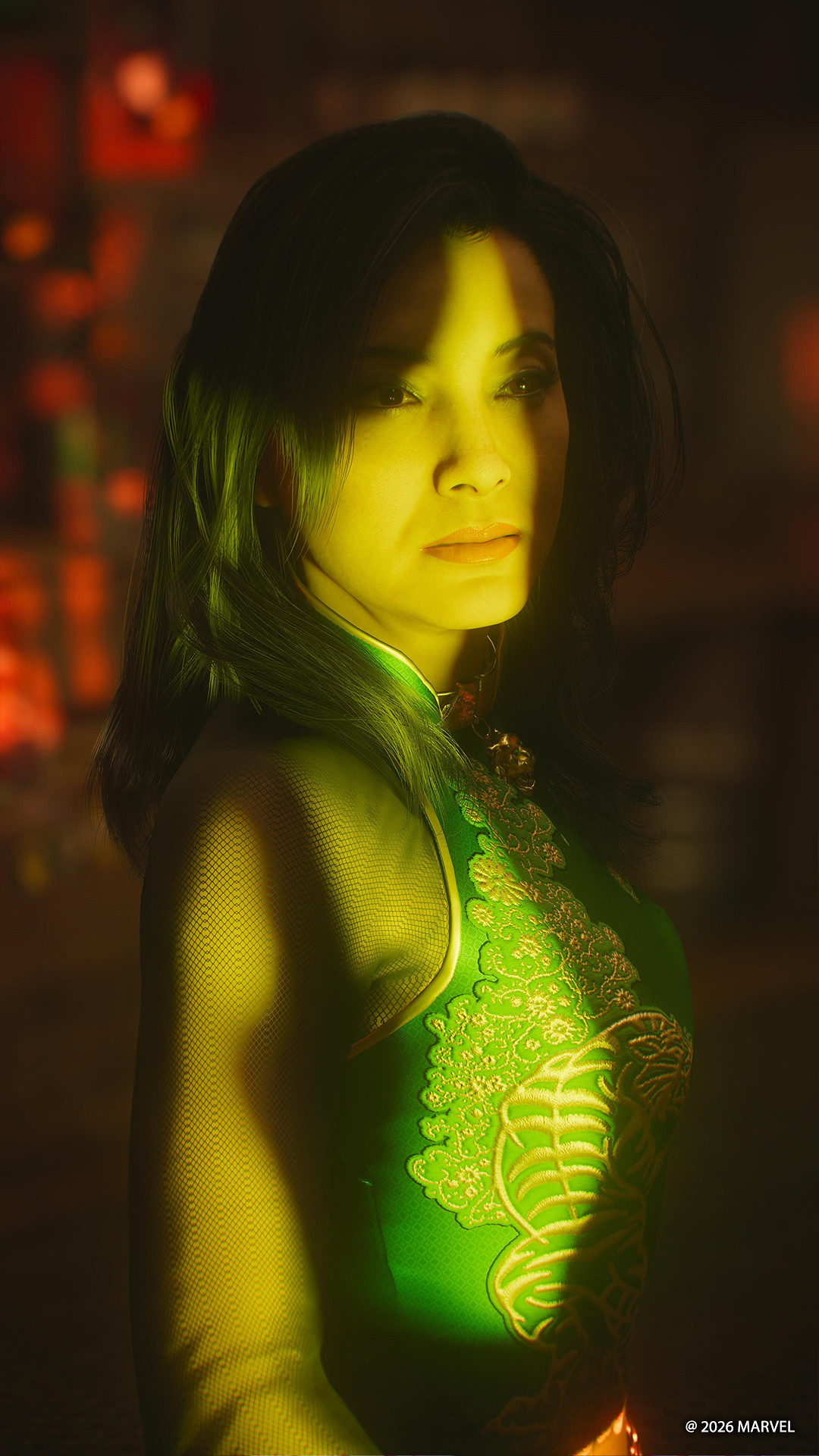
Share of the Week: 007 First Light https://ift.tt/BIg8Umt
Last week, we asked you explore the new Photo Mode in 007 First Light using #PSshare #PSBlog for a chance to be featured. Here are this week’s highlights:
call_me_xavii shared Bond blasting at enemies with his Aston Martin
WildJogurt shared a turtleneck-wearing Bond receiving mission orders
lucaslu_ckli shared a stylist look at James’ Aston Martin
m1rko_vp shared a black and white portrait of James looking dashing in the field
Milz_VP shares James checking out his outfit in the mirror
wern_r shares James posing next to Jack the bulldog
Search #PSshare #PSBlog on Twitter or Instagram to see more entries to this week’s theme, or be inspired by other great games featuring Photo Mode. Want to be featured in the next Share of the Week?
THEME: Costume SUBMIT BY: 11:59 PM PT on October 28, 2026
Next week, share your favorite in-game costumes or outfits from the game of your choice using #PSshare #PSBlog for a chance to be featured.
Saros: creating the epic Overlords of Carcosa https://ift.tt/xSGfvRZ
Housemarque and Nixxes developed Saros in close collaboration; one area was developing the set-piece bosses. Housemarque brought the creative vision, world, combat language, visual concepts, and signature bullet-hell DNA. Nixxes brought the bosses to life through encounter design, animation, environments, lighting, and technical implementation.
The result was a set of encounters designed to challenge players, surprise them, and deliver the kind of spectacle PlayStation players expect from a Housemarque action experience. Spoilers for the bosses of Saros ahead, so read at your own risk.
Collaboration with Housemarque
Boss fights in Saros are fully staged encounters, not just enemies with larger health bars, so that required close collaboration from the start. Housemarque handled boss concepts, visual direction, and VFX identity. Nixxes focused on animation, environments, technical design, boss behaviour, and attack implementation, with Housemarque’s final review and collaboration.
The road to developing a boss started with a briefing that outlined the vision, gameplay goals, and visual direction for the encounter. From there, Nixxes pitched its take, built early prototypes and first-playable versions, refining each encounter through iteration, playtesting, and polish until shipping.
What makes a Saros boss?
When designing bosses for Saros, we followed a few guiding principles, starting with three distinct phases for every boss encounter, each with its own identity, changing how the encounter looks, feels, and plays.
A typical boss battle in Saros lasts about three to eight minutes (Saros: Zenith has a tighter arcade experience), with the challenge coming mainly from boss behaviour, arena transformation, environmental hazards, bullets, beams, and physical attacks. These were also designed to encourage players to use their shield, jumping, parrying, and dashing abilities, knowing that a good boss attack should make players move with intent, not in panic.
Most importantly, when players were defeated by a boss, we asked: do they understand why they lost, do they know what to do differently next time, did it feel like their own mistake rather than something unfair, and do they want to try again?
The Bosses
Prophet — the wall boss
The Prophet was our introductory boss and a first major test for players. Because the Prophet appears early in the game, we wanted it to teach players what a Saros boss could be without becoming a major progression blocker. With the Prophet, we wanted a fight that felt dramatic and threatening while still welcoming players to the structure and expectations of boss combat.
Architect — the flying boss
The Architect is one of the game’s most dramatic encounters, fought atop a massive tower after earlier foreshadowing. The boss comes at you with everything it has, destroying the environment as the fight unfolds, and it doesn’t quit until the very end. The entire encounter centres on the collapsing arena, making the grapple hook a fundamental part of the battle. You are not just fighting the boss; you are fighting to survive the arena.
Shepherd — the massive boss
The Shepherd is the game’s largest boss and biggest visual spectacle, set on a ship on a stormy sea. It has an intimidating scale and culminates in a terrifying transformation by the end of the encounter. This boss is all about tentacles, which you must dodge and jump over throughout the fight. The tentacles also shrink the arena and spawn attacks from unexpected directions. In a dramatic conclusion, you face the boss on a sloped arena.
Priestess — the magic boss
The Priestess uses illusion and transformation, making for a less grounded, more surreal encounter with a strong phase identity. We wanted players to feel the Priestess could be the final boss, even if the journey was not over yet. The encounter evolves from illusion-based clone combat into a large-scale, floating arena, encouraging players to combine combat, puzzle-solving, and platforming to survive.
King — the final boss
As the final boss, we wanted the King encounter to feel direct, intense, and skill-focused. It is also a major narrative moment, and the encounter needed to reflect its importance. The boss battle escalates in personality as much as in challenge. It starts controlled and relentless, then becomes more brutal, and finally something feral and unpredictable. As a result, the King doesn’t rely on a complicated gimmick. Instead, the fight tests everything the player has learned, where mastery matters most.
Looking back and looking ahead to Saros: Zenith
Working on bosses for Saros was an amazing opportunity for the Nixxes content team. We aimed to make each one feel fair, thrilling, and worth trying again. And each encounter challenged us to think about how we could create the most memorable moments for the player. More importantly, it let us collaborate closely with Housemarque on the fast, responsive, high-intensity action that defines the game.
With Saros: Zenith, players can return to these battles in Housemarque’s new Overlord Rush mode and experience them in a fresh, faster, and more replayable way. We are excited to see how players take on the challenge and fight to reach the top of the Leaderboard.
Photo Modes are a rewarding way to get to grips with some essential elements of photography, while letting you more closely examine and appreciate a game’s art design and increasingly photorealistic visuals. Feature-rich Photo Modes put an entire suite of virtual lighting rigs at your fingertips, subtracting concerns about space requirements, or the patience of your models as you get your composition just right.
Insomniac in particular continues to bring a superheroic heft to its photographic options, first established through its Marvel’s Spider-Man games, with Marvel’s Wolverine. The game’s out for just over a month, and we continue to be dazzled by the Photo Mode skills players have displayed since launch. We’ve equally had questions from budding shutterbugs asking for guidance on how to better their shots. Here, we unpack some of the options the studio offers up in Photo Mode and some examples to get you thinking.
Warning: some of the photos here are spoilers for the game’s outfits and mid-game content
Set up tips
Chapter select: Once you’ve rolled credits, loading your save file will pop you back in Logan’s cabin. Head to the bed to access a chapter select menu, letting you leap into any location or moment from the story. From Canada’s snowy wilderness, neon-soaked Shinjuku arcades, to the compact districts of Madripoor and more, you got plenty of backdrops, blockbuster moments and quieter character moments to work with.
Photo Mode UI repositioning: Insomniac has packed in a multitude of options in its Photo Mode to cater to every need you’d have. That includes up to 5 independent lighting rigs (plus customisable natural light options!), character poses, miniature mode, filters and more. Extensive options means a chunky, multi-tab Photo Mode UI. Remember: if you find the UI is blocking your shot, you can tap a button to alternate it between the left and right of your screen.
D-Pad Shortcuts: As default you access Photo Mode from the Pause menu, but jump into Settings, and you can map a shortcut to Photo Mode to the DualSense’s D-Pad. And while you’re there, assign another D-Pad button to adjust the game speed, letting you reduce game speed by 30, 50 or 70%. Useful when you want to capture the perfect action moment.
Landscape, portrait or between: You can use the Tilt option to angle the camera from a straight landscape shot, to a dramatic dutch angle, or a 9×16 portrait image. You’ll need to tilt your own head to better compose the shot with that last option (or, if you’re playing on a PlayStation Portal, just turn the handheld device on its side).
I see five lights
A headline feature of Marvel’s Wolverine Photo mode is five independent lights, each offering separate colour spectrums, intensity options, adjustable distances and such. You can choose each light to be Sphere (casting a wider glow from their centre) or Spotlights (a stronger directional beam).
One to two lights: That can seem daunting, but you don’t have to use them all! In fact, for individual portrait shots, just one or two will do. In photography terms, two lights cover your key light, and your rim light. The former is the main light, illuminating your subject from the front. Play about with having this light to the side, above or below your subject to change the mood of the shot. The latter usually is positioned behind your subject at a lower intensity and at a slight angle, casting a soft fall of light onto your model’s side, shoulders or hair, which separates them from the background.
But those guidelines aren’t rigid: play with lighting, shifting from traditional portraiture to something more startling, as I’ve done with the above. (Which positions Logan’s character model within the radius of a gun’s muzzle flash during a fight scene.)
And once you’ve comfortable with one subject, extend it to two models, then group shots.
So, 5 lights. There’s a few examples of location-based uses that could help wrap your head around how to operate them.
Try this: Take the arcade early on in the “In the Shadows” chapter. It’s a barrage of colour, glowing cabinet screens and neon ceiling lights battling for dominance. Switch to Photo Mode and use each light to mimic the glow of a different arcade cabinet screen, or infer ones that aren’t even in shot. Tinker with the intensity and light type of each. You’re just trying to best replicate the mood and look of an arcade bar.
I applied the same trick to the casino scene below, but with two lights only. One was positioned just in front of the fruit machine to give off that notable glow, which bathed Jean Grey’s left side in purple light. Logan on the other hand was the focus of an off-white light off-camera, mimicking the glow from the wider casino floor.
Three lights: The below photo ups the set to three lights, this time coloured to replicate the flow from the two lanterns to the rear of the shot, and the candles on the floor in the foreground. I upped the intensity of the front light to cast a strong shadow on the floor. A similar trick I applied to an alternate version on the arcade scene: notice the shadow of the grabber claw cast on the back wall?
Move him as you need him
In all the shots thus far, my focus was ever on the position and body language of NPCs, rather than Logan himself. That’s because with the Character Pose option, you’re able to cycle through a set of different locked poses, and then, with movement options, you’re free to move Wolverine to anywhere within a generous radius (up, down, left, right, back and forward). You can rotate him, cycle through a variety of facial expressions and switch between any suits or claws you’ve currently unlocked. You can also hide him entirely, or any enemy NPC thanks to a toggle option in the menus.
A good rule of thumb with any photo: once snapped, cycle through the different suits before exiting. Some might fit the mood of a shot better, and the various materials on each react differently to light sources.
Note: Logan’s original position when entering Photo Mode will be taken as the centre point to which the 5 independent lights will circle around, not where he is moved to. So you’ll need to adjust lights accordingly if you want him lit a certain way.
Ready, set, action (figure)
A fun feature making a welcome leap from Marvel’s Spider-Man 2: Action Figure mode. Found in the Character Pose sub-menu, one click turns Logan miniature. Ripe for some creative executions. For myself, I envisioned Wolverine sitting in Jean’s outstretched palm. In trying to capture that moment during a combat moment, I stumbled onto something unexpected: the world’s smallest Fastball Special.
Worth noting: despite his (more than usual) diminutive size, mini-Logan’s model has the same movement radius (up, down, left right, forward or back) as his normal-sized version.
The above had a comic book cover-like look I liked, which led me to the rabbit hole of using miniature work, and the ability to switch backgrounds to a specific colour palette to mimic something you’d see on the front of a graphic novel.
The above was possible due to another feature worth flagging: Logan has an entirely separate set of poses when he’s airborne, as exampled below.
Merging Figures
The Wolverine character model isn’t blocked by other character models or environmental objects when moving him,
giving you the flexibility to get characters side by side for some dramatic shots. Don’t worry about any clipping or overlaps between models! The right camera angle will hide that imperfection (such as the shots below: in the first Jean’s right arm is actually clipping through Logan’s jacket, the second, Logan’s knee is clipping through Jean’s back).
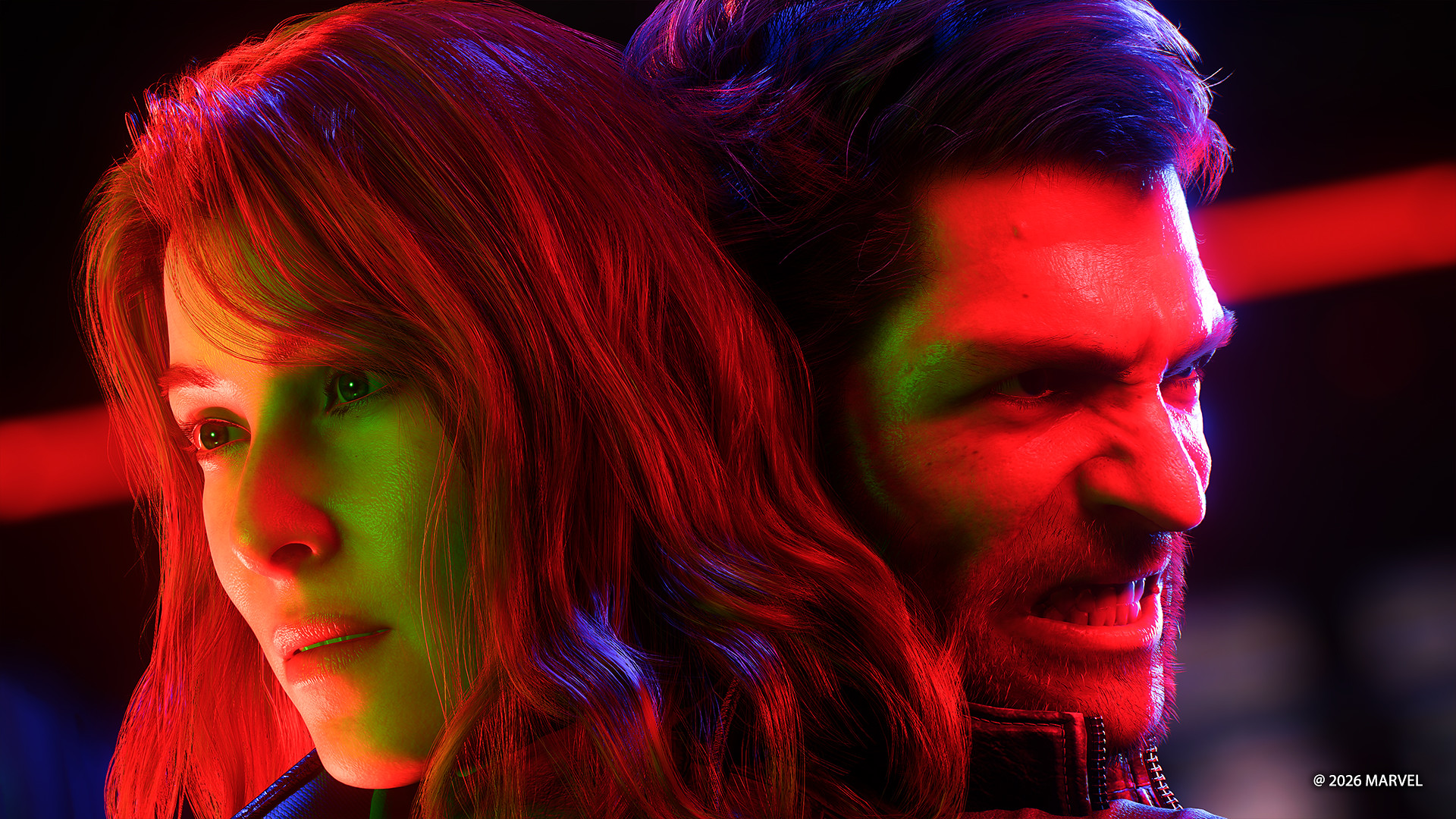
That said, don’t be afraid to get creative with the clipping. Example below: having Jean and Logan’s heads blend together, a nod to sci-fi movie-style posters and referencing how the game’s story delves into his mind and memories.
Composed and captured your shot? Now pan around
Captured a great shot? Great. But before you back out of Photo Mode, train yourself to do one last pan around. There may be an alternative angle to your setup, a hidden detail just out of view. Heck, there could be a completely different photo worth capturing in the frozen moment. For me, an early example was the below. Originally this was a neon-lit picture of Wolverine in a completely different pose. But I widened the lens and spotted Jean’s hand in the foreground, which made for a fun framing device and also gave a different vibe to the photo.
Now go grab some great photos
The above isn’t intended to be an exhaustive run down of the game’s many Photo Mode options, but a few primers to get you thinking and start on capturing great shots of your own. If you need more inspiration, find a few more galleries below!
Street Photography Gallery
Remember to look beyond your immediate view. Every location in the game is rich with cool environments or background characters going about their lives.
Download the image
Download the image
Download the image
Download the image
Download the image
Download the image
Download the image
Action Gallery
You can increase the amount of blood or damage on Logan’s character model via a specific menu option in Photo Mode.